

Three picks to play right now

Casual
Clay Craft Tycoon
You’re juggling a surprisingly satisfying little production line here, and the appeal comes from watching every step of the business start to click together. Raw clay turns into useful stock, your warehouse fills up, and the money only really starts flowing once you keep those stages balanced instead of overbuilding one corner of the factory. What makes it work is the theme: shaping humble materials into everyday pottery gives the whole tycoon loop a more hands-on feel than the usual generic idle business setup. Daily objectives add structure, so you’re not just waiting for numbers to rise, and each expansion feels like a practical upgrade rather than busywork. It stays light and approachable, but there’s enough management to keep you thinking about throughput, storage, and sales timing. If you like casual tycoons with a clean loop and steady sense of growth, this one lands nicely.
Merge
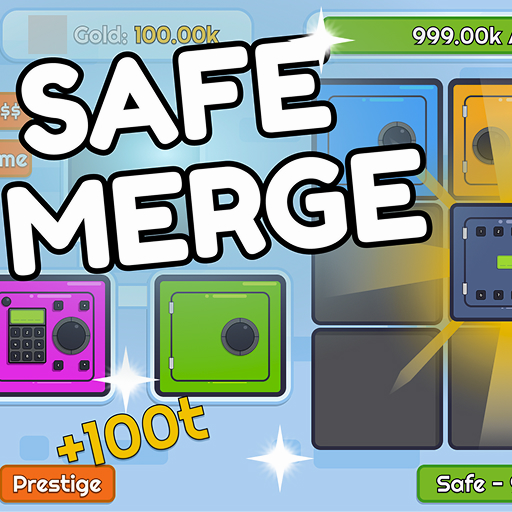
Safe Merge
You spend most of your time dragging matching safes together, but the hook is in how steadily the board opens up. Each merge pushes you toward a new safe design, and that visible checklist on the side gives the whole climb a satisfying sense of progress. It plays like a light idle game rather than a frantic puzzler, so the appeal is watching your setup become more efficient over time instead of chasing quick reactions. The prestige system gives the loop some needed bite: when progress slows, resetting for better income makes the next run feel smarter instead of repetitive. That rhythm of combine, unlock, stall, and restart is what carries it. Safe Merge is simple almost to a fault, but it understands the appeal of incremental progress and collectible upgrades. If you like low-pressure management games with a clear long-term target, this one settles into an easy groove.

Agility
Goo Goo Gaga Clicker
What keeps you clicking here isn’t just the number climb; it’s the steadily stranger rhythm of unlocking one ridiculous Goo Goo Gaga form after another. The early game is pure tap-happy nonsense, but after a few upgrades it settles into a familiar idle groove where timing your spending matters more than mindless hammering. You’re chasing points, stacking passive gain, and deciding whether to push raw click strength or let the background income carry the load. The meme theme is intentionally absurd, and that silliness does a lot of the heavy lifting when the loop gets repetitive. Still, the game understands the appeal of short bursts: check in, buy a few boosts, watch progress speed up, repeat. If you like clickers that lean into internet-brain chaos without overcomplicating the formula, this one has a goofy, easy-to-digest hook.
Idle browser games have a strange reputation problem. People talk about them as if they are disposable background noise, but the good ones are built around a much harder trick: making a thirty-second check-in feel consequential. That is the standard that matters, especially for players who want something they can leave alone without feeling like they are abandoning the game.
Too many games in the genre confuse activity with progress. They flood the screen with timers, currencies, chores, and upgrade buttons, then call the blur of motion a satisfying loop. The better design approach is narrower and smarter: give the player one or two decisions that reshape the next cycle, then get out of the way.
That is the lens for these four picks. They are not the biggest or the loudest idle browser games, but each one understands a different part of the contract between player and system. One turns meme chaos into legible escalation. One makes distance feel like strategy. One uses service breakdowns to keep its economy alive. One quietly proves that merge games work best when selling matters as much as combining.
The Best Idle Browser Games Create Check-Ins, Not Chores
An idle game fails the moment every return visit feels identical. Click a few times, buy the obvious upgrade, close the tab, repeat. That loop can survive on novelty for a while, but not on design strength. The games worth recommending create a clear question every time you come back: should you push farther, automate earlier, cash out now, or hold for a better conversion?
That question is what gives the genre shape. Without it, an idle game is just a progress bar wearing a cartoon skin. With it, the waiting becomes loaded; time away from the game generates tension, because you know your next action will matter.
Goo Goo Gaga Clicker understands this immediately. Its core joke is loud and absurd, but the loop underneath the joke is sharply readable: each tap pushes you toward a new form, and those transformations are not just cosmetic rewards but pacing devices. The game keeps the clicker rhythm brisk enough that you feel the next threshold approaching, then stretches that momentum into a collection grind that gives the chaos structure.
Goo Goo Gaga Clicker
Goo Goo Gaga Clicker is a fast, satisfying idle clicker built around one of the internet’s newest chaotic obsessions: the “Goo Goo Gaga” meme. Goo Goo Gaga Clicker takes the addictive, dopamine-fueled mechanics of Brainrot Clicker and gives them a surreal makeover. What starts as a simple tap session quickly turns into a full-on collection grind where every click pushes you closer to the next weird, iconic form!
Play Now
What makes that work is not simply the meme skin. Plenty of novelty-driven clickers burn out because the gag arrives before the system does. Goo Goo Gaga Clicker avoids that trap by using recognizable escalation points. You are not staring at an endless number climb; you are chasing a specific weird reveal, which makes the early and midgame feel like a sequence of targets rather than a flat treadmill.
Meme Energy Only Works When the Upgrade Rhythm Is Clean
There is a lazy assumption that silly idle games do not need discipline. The logic goes like this: if the art is chaotic enough and the references are current enough, players will forgive muddy progression. They will not. Even a joke game needs a clear internal tempo, and that is where many browser clickers collapse.
Goo Goo Gaga Clicker succeeds because the absurdity sits on top of a loop that is easy to read at a glance. You click, you accelerate, you unlock a stranger version of the central bit, and the promise of the next mutation keeps the action legible. The dopamine comes from proximity to a concrete threshold, not from random spectacle splashed across the screen.
That distinction matters for idle browser games as a whole. Theme can attract the first few minutes, but pacing earns the next thirty. When a game tells you exactly what the next milestone is and makes the road there feel just short enough, the session gains momentum. When it hides the logic behind noise, it becomes disposable.
This is also why Goo Goo Gaga Clicker is stronger than it first appears. It understands that collection is a form of mapmaking. Each unlocked form tells you where you are in the economy, how far you have come, and why another burst of input is worth it. The silliness is not decoration pasted over nothing; it is the wrapper for a progression ladder the player can actually read.
Distance Is a Better Idle Mechanic Than Raw Currency
A huge amount of the genre still treats money as the only stat that matters. Bigger number, bigger number, bigger number. The problem is that currency alone is abstract; it tells you that growth happened, but not what that growth changed. The better alternative is progress you can picture.
Desert Rover Survival leans into that idea by tying advancement to reach. You start with a bare setup, then slowly turn a fragile vehicle into something capable of pushing deeper into a hostile landscape. Upgrading parts and technology does more than increase efficiency on a spreadsheet; it extends your horizon, which gives every improvement a visible purpose.
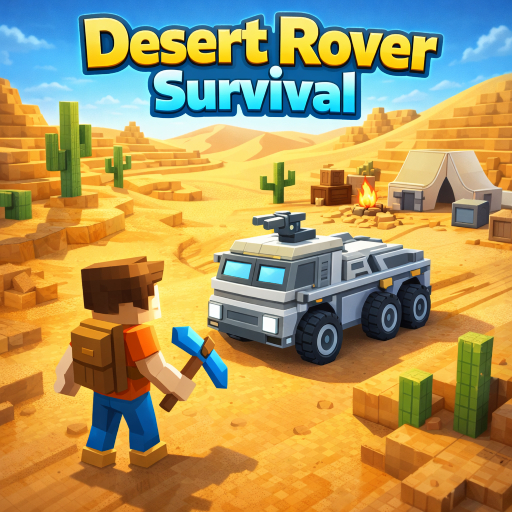
Desert Rover Survival
Desert Rover Survival is an idle survival adventure set in a harsh desert world. Begin with a simple setup and slowly build your own desert rover, upgrading parts and improving technology to push farther into the wasteland.
Play Now
That simple choice does a lot of work. A longer journey feels different from a larger bank account because it implies risk, planning, and failure. The desert setting helps, but the real design win is that the game makes logistics emotionally legible. Better parts are not just buffs; they are permission to attempt territory that previously felt out of reach.
This is where many idle survival hybrids get tripped up. They layer hunger bars, crafting trees, durability systems, and half a dozen side resources onto what should be a clean forward drive. Desert Rover Survival seems more focused than that. The rover itself is the thesis: build smarter, last longer, go farther. That gives the player a sturdy mental model, which is exactly what an idle loop needs.
There is also something important here for players who claim they want “passive” games. Most of them do not really want passivity; they want low-friction strategic oversight. They want to step away, return, and make one meaningful improvement that changes the next run. Distance-based progression delivers that far better than abstract accumulation ever will.
Service Friction Is Why a Bakery Tycoon Can Hold Your Attention
The fastest way to flatten an idle management game is to over-automate it. Once every machine runs perfectly and every transaction resolves without friction, the fantasy is complete but the game is dead. Management needs pressure points. Something has to back up, spill over, or break the line of efficiency so the player has a reason to care.
My Cake Shop: Bake & Serve gets mileage from exactly that kind of operational mess. Yes, it has the usual tycoon hooks: new locations, upgraded machines, broader expansion. But the tactile detail matters more. You are baking and stacking colorful donuts, cleaning dirty floors, and dealing with waves of waiting customers. Those interruptions create texture in the loop.
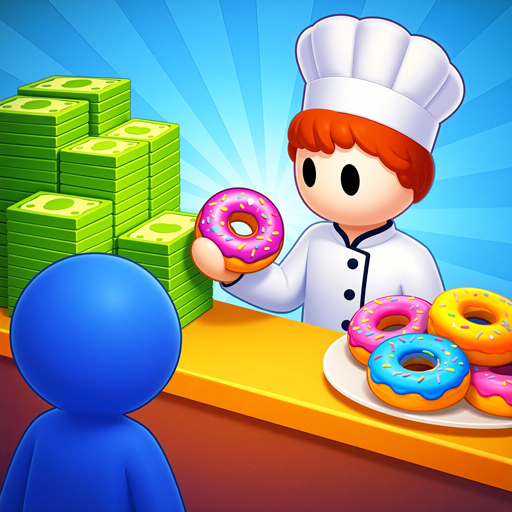
My Cake Shop: Bake & Serve
Run your own sweet bakery in My Cake Shop! Bake and stack colorful donuts, clean messy floors, and serve hungry customers. Expand across the world by unlocking new bakery locations and upgrading machines. Manage crowds, grow your patisserie empire, and become the ultimate idle arcade tycoon!
Play Now
That may sound small, yet it is the difference between an economy you monitor and one you merely watch. Cleaning the floor is not glamorous, but it does something useful for pacing: it prevents the bakery fantasy from dissolving into pure automation too quickly. Instead of staring at passive income, you are managing a system whose weak points remain visible.
The best idle browser games often survive on these moments of mild disorder. Perfect efficiency sounds appealing, but in practice it makes the player irrelevant. My Cake Shop preserves the fantasy of growth while keeping just enough hands-on maintenance in the mix to remind you that scale has consequences. More customers do not only mean more money; they mean more strain on the service loop.
That makes the game's expansion arc stronger. Unlocking a new bakery location is satisfying precisely because the current one has taught you what scale costs. You are not buying another venue as a cosmetic prize. You are carrying your operational knowledge into a larger machine and testing whether your upgrades actually solved the earlier bottlenecks.
Merge Games Only Get Interesting When Selling Is the Real Decision
Merge games are often mistaken for pure relaxation software. Drag one object into another, create a higher-tier version, repeat until the board is clean. That loop can be pleasant for a while, but it becomes shallow when the only correct move is always “merge the nearest match.” Strategy appears when the board, the economy, and the timing start to push against each other.
The Flowers: Merge and Sell Bouquets makes that push visible by attaching the merge loop to customers, coins, and competitive ranking. Yes, you are combining flowers in a warm garden setting, and yes, the pruning shears help you clean out unwanted clutter. But the crucial verb in the title is not “merge.” It is “sell.” The board is not just a puzzle surface; it is inventory waiting to be converted.

The Flowers: Merge and Sell Bouquets
Combine flowers in the relaxing atmosphere of a summer garden and earn coins! Sell your bouquets to customers and clear your garden of unwanted flowers with your pruning shears! Earn more coins than other players to take a place on the leaderboard!
Play Now
That shift matters because it forces prioritization. Do you keep combining for a more valuable bouquet, or do you cash out now to stabilize your coin flow? Once a leaderboard enters the picture, that question gets sharper. The player is no longer optimizing solely for tidiness or completion. They are optimizing for timing and value extraction.
This is exactly why merge-based idle browser games can feel better than more straightforward clickers when they are done well. They create visible board tension. Space is limited, future value is uncertain, and every sell decision closes off one path while funding another. The Flowers does not need to become stressful to become compelling; it only needs to make the economy legible enough that each bouquet feels like a choice instead of a reflex.
The pruning mechanic helps too. Removing unwanted flowers is a small but important piece of agency, because it lets the player correct drift rather than surrendering to clutter. Good idle design is often about controlled cleanup: giving players a way to steer an increasingly messy system without forcing them into constant micromanagement.
Stop Calling Any Background Tab an Idle Game Worth Recommending
The genre has been hurt by soft standards. Too often, “good for multitasking” becomes the only compliment an idle game receives. That is not criticism; that is surrender. A browser tab does not deserve praise simply because it can exist next to your email or your music player. It deserves praise when the return trip feels deliberate.
These four games point to a stricter, better way to talk about idle browser games. Goo Goo Gaga Clicker proves that even nonsense-heavy presentation needs disciplined thresholds and visible rewards. Desert Rover Survival shows how spatial progress can make upgrades feel concrete. My Cake Shop: Bake & Serve turns mess and service friction into the engine of attention. The Flowers: Merge and Sell Bouquets demonstrates that a merge loop becomes richer when market timing matters as much as combination.
The common thread is respect. Each game gives the player a reason to come back beyond habit. That reason may be the next transformation, the next stretch of desert, the next service bottleneck, or the next high-value bouquet. What matters is that the game asks a fresh question rather than replaying the same answer.
That is the bar worth keeping. The next time someone asks for idle browser games, do not recommend the noisiest clicker or the most passive time sink by default. Recommend the game whose next decision you can still remember ten minutes after closing the tab, then argue for why that decision matters.
Game-Page Links
More ArcadeZone Picks
Merge
The Flowers: Merge and Sell Bouquets
You’re working inside a narrow, doorway-shaped garden where every placement matters more than it first seems. Each new bloom drops in from the top, and the pleasure comes from nudging matching flowers together, building them into fuller arrangements, then cashing out bouquets for coins before the space clogs up. The pruning shears add a nice bit of housekeeping, giving you a way to cut away junk pieces when the board gets awkward, but they don’t erase bad planning. What makes this one click is the balance between calm presentation and quietly demanding board management. You’re not just merging for bigger numbers; you’re deciding when to hold a promising chain, when to sell, and when to clear space before one bad placement ruins the whole run. It’s gentle, tidy, and more tactical than its soft garden theme suggests.

Puzzle
Thread Sort
You spend most of your time untangling color order on spools, but the clever hook is what happens after a clean solve: the sorted thread turns into a stitched picture. That little payoff gives each level a sense of purpose beyond clearing pegs. The puzzle itself is easy to read but not always easy to undo once you clog your empty spaces with the wrong shades. It has the same calm rhythm as liquid-sorting games, yet the sewing theme makes the whole thing feel warmer and more tactile. The visuals stay soft and cozy, and watching the final image fill in is genuinely satisfying instead of feeling like a throwaway reward. If you like low-pressure puzzle games that still punish sloppy planning, this one lands in a nice middle ground.
Cooking
My Cake Shop: Bake & Serve
You spend most of your time hustling between stations, grabbing fresh pastries, tidying spills, and keeping the line from turning into a traffic jam. What makes this bakery sim work is the constant push-pull between quick chores and longer-term upgrades. One moment you're stocking sweets for impatient customers, the next you're deciding whether a better machine or a new location will save more time. The idle tycoon framing keeps progress moving, but it still feels hands-on because the floor gets messy fast and every delay ripples through the shop. My Cake Shop: Bake & Serve leans more arcade than deep management, which suits its breezy pace. It's easy to read, easy to settle into, and surprisingly good at making small efficiency gains feel satisfying when your once-chaotic counter finally starts flowing smoothly.

Puzzle
Bottle Logic
What works here is the steady, almost meditative rhythm of sorting one bottle at a time until a messy layout suddenly clicks into order. You spend each level untangling color stacks, planning a few moves ahead, and protecting the empty space that keeps the whole puzzle solvable. Early stages ease you in, but the larger layouts start punishing careless shuffling and reward patience instead of speed. That makes Bottle Logic feel less like a flashy brain teaser and more like a clean, quietly demanding logic game you can settle into for a while. The huge level count helps, but the real hook is how often a board looks impossible right before the solution reveals itself. Endless mode is a nice extra, though the handcrafted stages are where the puzzle design feels most deliberate and satisfying.
Related Posts
Keep Reading


Frequently Asked
Quick Answers
The better idle browser games create meaningful return decisions instead of endless low-stakes input. A basic clicker often asks you to press for numbers and buy the obvious upgrade. A stronger idle game changes the next cycle with each choice, whether that means pushing farther into a map, fixing a production bottleneck, or deciding when to sell for maximum value.
Goo Goo Gaga Clicker is the cleanest short-session pick because its upgrade rhythm is easy to read and its transformation milestones give each visit a clear target. You can jump in, push toward the next unlock, and leave without losing track of the loop. It works well when you want fast feedback rather than a longer management arc.
They can be, but only when the merge loop is tied to longer-term progression and does not require constant full attention. The Flowers: Merge and Sell Bouquets fits because merging feeds an economy, selling creates timing decisions, and the board can be managed in brief sessions. It is not idle just because pieces combine automatically; it is idle because the game supports meaningful intermittent play.
Desert Rover Survival likely has the strongest strategic shape because its upgrades are tied to distance and survivability rather than pure income. Improving the rover changes how far you can travel, which makes each part upgrade feel like a route-planning decision. The Flowers is close behind if you prefer economy timing and board management over expedition-style progression.
Sources
What This Piece Builds On
google_trends · Google Trends web games·google.com · April 11, 2026
Google Trends rising query around "web games" with recent interest.
google_trends · Google Trends browser games·google.com · April 11, 2026
Google Trends rising query around "browser games" with recent interest.
google_trends · Google Trends browser games·google.com · April 11, 2026
Google Trends rising query around "browser games" with recent interest.
Need a different starting point?
Curated landing pages built around what players actually came for — not raw filter results.